•  

China: Flock of Migratory Geese Flies in Formation Over Jinchang, Gansu

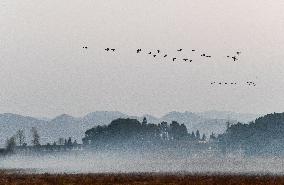
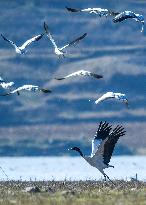
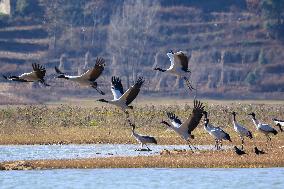
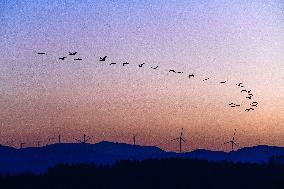
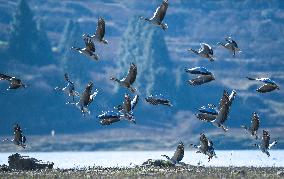
On October 11, 2025, in Jinchang, Gansu, a video captured the spectacular sight of a vast flock of migratory geese flying southward in perfect formation. Against the clear autumn sky, the birds formed long V-shaped lines that shifted and swayed with the wind, creating a mesmerizing natural display.

  •  
Oriental White Storks Migration - China

Oriental White Storks Migration - China

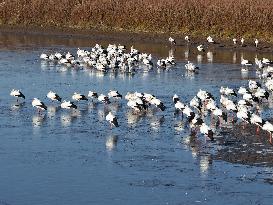
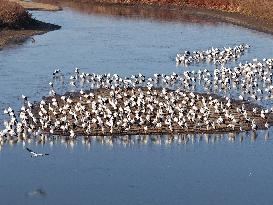
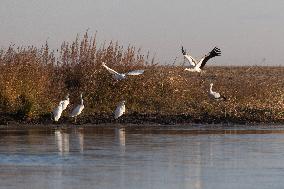
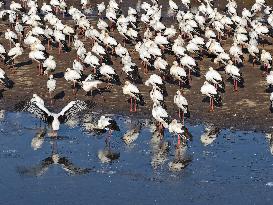
A drone photo taken on October 22, 2025 shows oriental white storks resting at a wetland along the Songhua River in northeast China's Heilongjiang Province. At present, a large number of migratory birds have gathered in various migratory bird habitats across the province and moved southward. Photo by Qu Yubao/Xinhua/ABACAPRESS.CO

  •  
Oriental White Storks Migration - China

Oriental White Storks Migration - China

A drone photo taken on October 22, 2025 shows oriental white storks resting at a wetland along the Songhua River in northeast China's Heilongjiang Province. At present, a large number of migratory birds have gathered in various migratory bird habitats across the province and moved southward. Photo by Geng Xiqing/Xinhua/ABACAPRESS.CO

  •  
Oriental White Storks Migration - China

Oriental White Storks Migration - China

This photo taken on October 22, 2025 shows oriental white storks at a wetland along the Songhua River in northeast China's Heilongjiang Province. At present, a large number of migratory birds have gathered in various migratory bird habitats across the province and moved southward. Photo by Qu Yubao/Xinhua/ABACAPRESS.CO

  •  
Oriental White Storks Migration - China

Oriental White Storks Migration - China

A drone photo taken on October 22, 2025 shows oriental white storks resting at a wetland along the Songhua River in northeast China's Heilongjiang Province. At present, a large number of migratory birds have gathered in various migratory bird habitats across the province and moved southward. Photo by Geng Xiqing/Xinhua/ABACAPRESS.CO

  •  
Fish Swimming Upstream in The Ganaraska River - Ontario

Fish Swimming Upstream in The Ganaraska River - Ontario

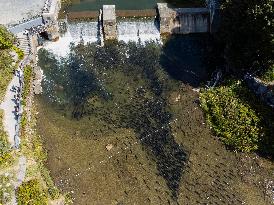
An aerial drone photo shows fish swimming upstream in the Ganaraska River during their migration to the spawning grounds at Port Hope, Ontario, Canada, September 10, 2025. Photo by Zou Zheng/Xinhua/ABACAPRESS.COM

  •  
Fish Swimming Upstream in The Ganaraska River - Ontario

Fish Swimming Upstream in The Ganaraska River - Ontario

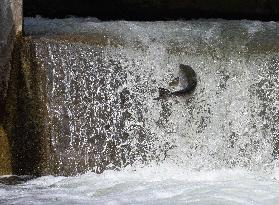
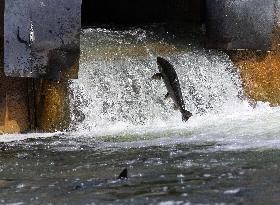
A fish tries to jump over a fish ladder in the Bowmanville Creek during its migration to the spawning grounds in Clarington, Ontario, Canada, September 10, 2025. Photo by Zou Zheng/Xinhua/ABACAPRESS.COM

  •  
Fish Swimming Upstream in The Ganaraska River - Ontario

Fish Swimming Upstream in The Ganaraska River - Ontario

A fish tries to jump over a fish ladder in the Ganaraska River during its migration to the spawning grounds at Port Hope, Ontario, Canada, September 10, 2025. Photo by Zou Zheng/Xinhua/ABACAPRESS.COM

  •  
Fish Swimming Upstream in The Ganaraska River - Ontario

Fish Swimming Upstream in The Ganaraska River - Ontario

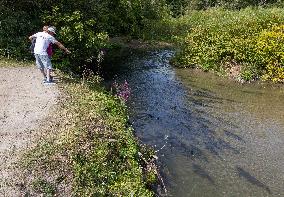
People watch fish swim upstream in the Bowmanville Creek during their migration to the spawning grounds in Clarington, Ontario, Canada, September 10, 2025. Photo by Zou Zheng/Xinhua/ABACAPRESS.COM

  •  
Tuna Fishing in Barbate - Cadiz

Tuna Fishing in Barbate - Cadiz

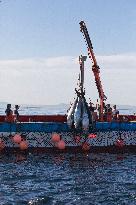
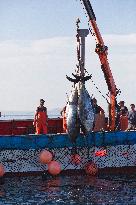
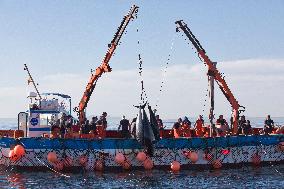
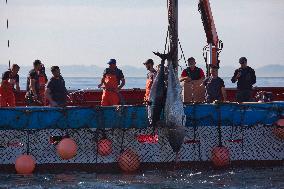
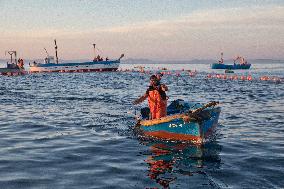
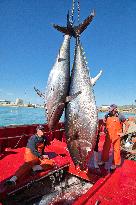
Several fishermen during the 'levantá' of tuna in the vicinity of Barbate, on May 27, 2025, in Barbate, Cadiz, Andalusia (Spain). The 'levantá' of Barbate is the culminating and most spectacular moment of traditional bluefin tuna fishing in the almadraba, an ancient art practiced every spring off the coast of Barbate (Cadiz). It consists of slowly raising the codend net, where the tuna have been trapped during their migration towards the Mediterranean, causing the large fish to emerge to the surface amidst flapping and foam, while the fishermen select and catch the largest specimens. Today, the technique has evolved: the divers sacrifice the tuna one by one with "luparas" (special poles), and the final lifting is done with cranes, although the ritual and collective nature of the process is preserved. Photo by Juanma Jiménez/Europa Press/ABACAPRESS.COM

  •  
Tuna Fishing in Barbate - Cadiz

Tuna Fishing in Barbate - Cadiz

A man cuts up a tuna during the 'levantá' of tuna in the vicinity of Barbate, on May 27, 2025, in Barbate, Cadiz, Andalusia (Spain). The 'levantá' of Barbate is the culminating and most spectacular moment of the traditional fishing of bluefin tuna in the almadraba, an ancient art that is practiced every spring off the coast of Barbate (Cadiz). It consists of slowly raising the codend net, where the tuna have been trapped during their migration towards the Mediterranean, causing the large fish to emerge to the surface amidst flapping and foam, while the fishermen select and catch the largest specimens. Today, the technique has evolved: the divers sacrifice the tuna one by one with "luparas" (special poles), and the final lifting is done with cranes, although the ritual and collective nature of the process is preserved. Photo by Juanma Jiménez/Europa Press/ABACAPRESS.COM

  •  
Tuna Fishing in Barbate - Cadiz

Tuna Fishing in Barbate - Cadiz

Several fishermen during the 'levantá' of tuna in the vicinity of Barbate, on May 27, 2025, in Barbate, Cadiz, Andalusia (Spain). The 'levantá' of Barbate is the culminating and most spectacular moment of traditional bluefin tuna fishing in the almadraba, an ancient art practiced every spring off the coast of Barbate (Cadiz). It consists of slowly raising the codend net, where the tuna have been trapped during their migration towards the Mediterranean, causing the large fish to emerge to the surface amidst flapping and foam, while the fishermen select and catch the largest specimens. Today, the technique has evolved: the divers sacrifice the tuna one by one with "luparas" (special poles), and the final lifting is done with cranes, although the ritual and collective nature of the process is preserved. Photo by Juanma Jiménez/Europa Press/ABACAPRESS.COM

  •  
Tuna Fishing in Barbate - Cadiz

Tuna Fishing in Barbate - Cadiz

A man cuts up a tuna during the 'levantá' of tuna in the vicinity of Barbate, on May 27, 2025, in Barbate, Cadiz, Andalusia (Spain). The 'levantá' of Barbate is the culminating and most spectacular moment of the traditional fishing of bluefin tuna in the almadraba, an ancient art that is practiced every spring off the coast of Barbate (Cadiz). It consists of slowly raising the codend net, where the tuna have been trapped during their migration towards the Mediterranean, causing the large fish to emerge to the surface amidst flapping and foam, while the fishermen select and catch the largest specimens. Today, the technique has evolved: the divers sacrifice the tuna one by one with "luparas" (special poles), and the final lifting is done with cranes, although the ritual and collective nature of the process is preserved. Photo by Juanma Jiménez/Europa Press/ABACAPRESS.COM

  •  
Tuna Fishing in Barbate - Cadiz

Tuna Fishing in Barbate - Cadiz

Several fishermen during the 'levantá' of tuna in the vicinity of Barbate, on May 27, 2025, in Barbate, Cadiz, Andalusia (Spain). The 'levantá' of Barbate is the culminating and most spectacular moment of traditional bluefin tuna fishing in the almadraba, an ancient art practiced every spring off the coast of Barbate (Cadiz). It consists of slowly raising the codend net, where the tuna have been trapped during their migration towards the Mediterranean, causing the large fish to emerge to the surface amidst flapping and foam, while the fishermen select and catch the largest specimens. Today, the technique has evolved: the divers sacrifice the tuna one by one with "luparas" (special poles), and the final lifting is done with cranes, although the ritual and collective nature of the process is preserved. Photo by Juanma Jiménez/Europa Press/ABACAPRESS.COM

  •  
Tuna Fishing in Barbate - Cadiz

Tuna Fishing in Barbate - Cadiz

Several fishermen during the 'levantá' of tuna in the vicinity of Barbate, on May 27, 2025, in Barbate, Cadiz, Andalusia (Spain). The 'levantá' of Barbate is the culminating and most spectacular moment of traditional bluefin tuna fishing in the almadraba, an ancient art practiced every spring off the coast of Barbate (Cadiz). It consists of slowly raising the codend net, where the tuna have been trapped during their migration towards the Mediterranean, causing the large fish to emerge to the surface amidst flapping and foam, while the fishermen select and catch the largest specimens. Today, the technique has evolved: the divers sacrifice the tuna one by one with "luparas" (special poles), and the final lifting is done with cranes, although the ritual and collective nature of the process is preserved. Photo by Juanma Jiménez/Europa Press/ABACAPRESS.COM

  •  
Tuna Fishing in Barbate - Cadiz

Tuna Fishing in Barbate - Cadiz

Several fishermen during the 'levantá' of tuna in the vicinity of Barbate, on May 27, 2025, in Barbate, Cadiz, Andalusia (Spain). The 'levantá' of Barbate is the culminating and most spectacular moment of traditional bluefin tuna fishing in the almadraba, an ancient art practiced every spring off the coast of Barbate (Cadiz). It consists of slowly raising the codend net, where the tuna have been trapped during their migration towards the Mediterranean, causing the large fish to emerge to the surface amidst flapping and foam, while the fishermen select and catch the largest specimens. Today, the technique has evolved: the divers sacrifice the tuna one by one with "luparas" (special poles), and the final lifting is done with cranes, although the ritual and collective nature of the process is preserved. Photo by Juanma Jiménez/Europa Press/ABACAPRESS.COM

  •  
Tuna Fishing in Barbate - Cadiz

Tuna Fishing in Barbate - Cadiz

Several fishermen during the 'levantá' of tuna in the vicinity of Barbate, on May 27, 2025, in Barbate, Cadiz, Andalusia (Spain). The 'levantá' of Barbate is the culminating and most spectacular moment of traditional bluefin tuna fishing in the almadraba, an ancient art practiced every spring off the coast of Barbate (Cadiz). It consists of slowly raising the codend net, where the tuna have been trapped during their migration towards the Mediterranean, causing the large fish to emerge to the surface amidst flapping and foam, while the fishermen select and catch the largest specimens. Today, the technique has evolved: the divers sacrifice the tuna one by one with "luparas" (special poles), and the final lifting is done with cranes, although the ritual and collective nature of the process is preserved. Photo by Juanma Jiménez/Europa Press/ABACAPRESS.COM

  •  
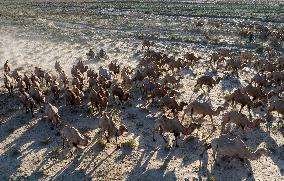
Camels On Their Summer Migration Journey - China

Camels On Their Summer Migration Journey - China

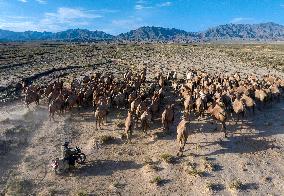
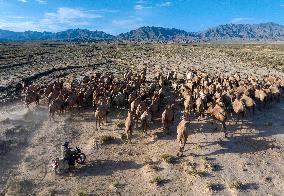
A drone photo taken on July 26, 2025 shows camels on their summer migration journey in the Kazak Autonomous County of Aksay, northwest China's Gansu Province. Herders in Jia'erwuzong Village of Aksay move their camels to the summer pastures of Qilian every summer, allowing the grasslands to rejuvenate and ensuring the sustainability of their animal husbandry. Photo by Gao Hongshan/Xinhua/ABACAPRESS.COM

  •  
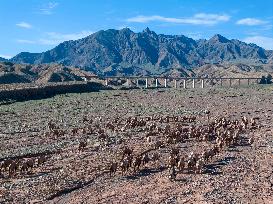
CHINA-GANSU-AKSAY-CAMEL MIGRATION (CN)

CHINA-GANSU-AKSAY-CAMEL MIGRATION (CN)

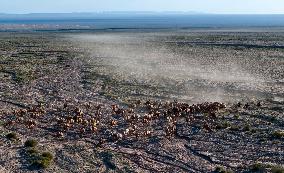
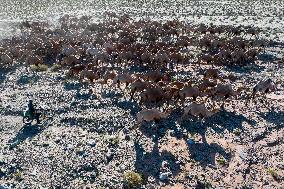
An aerial drone photo taken on July 26, 2025 shows camels on their summer migration journey in the Kazak Autonomous County of Aksay, northwest China's Gansu Province. Herders in Jia'erwuzong Village of Aksay move their camels to the summer pastures of Qilian every summer, allowing the grasslands to rejuvenate and ensuring the sustainability of their animal husbandry. Photo by Gao Hongshan/Xinhua/ABACAPRESS.COM

  •  
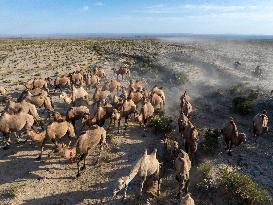
CHINA-GANSU-AKSAY-CAMEL MIGRATION (CN)

CHINA-GANSU-AKSAY-CAMEL MIGRATION (CN)

An aerial drone photo taken on July 26, 2025 shows camels on their summer migration journey in the Kazak Autonomous County of Aksay, northwest China's Gansu Province. Herders in Jia'erwuzong Village of Aksay move their camels to the summer pastures of Qilian every summer, allowing the grasslands to rejuvenate and ensuring the sustainability of their animal husbandry. Photo by Gao Hongshan/Xinhua/ABACAPRESS.COM

  •  
CHINA-GANSU-AKSAY-CAMEL MIGRATION (CN)

CHINA-GANSU-AKSAY-CAMEL MIGRATION (CN)

An aerial drone photo taken on July 26, 2025 shows camels on their summer migration journey in the Kazak Autonomous County of Aksay, northwest China's Gansu Province. Herders in Jia'erwuzong Village of Aksay move their camels to the summer pastures of Qilian every summer, allowing the grasslands to rejuvenate and ensuring the sustainability of their animal husbandry. Photo by Gao Hongshan/Xinhua/ABACAPRESS.COM

  •  
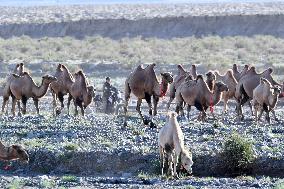
CHINA-GANSU-AKSAY-CAMEL MIGRATION (CN)

CHINA-GANSU-AKSAY-CAMEL MIGRATION (CN)

This photo taken on July 26, 2025 shows camels on their summer migration journey in the Kazak Autonomous County of Aksay, northwest China's Gansu Province. Herders in Jia'erwuzong Village of Aksay move their camels to the summer pastures of Qilian every summer, allowing the grasslands to rejuvenate and ensuring the sustainability of their animal husbandry. Photo by Gao Hongshan/Xinhua/ABACAPRESS.COM

  •  
CHINA-GANSU-AKSAY-CAMEL MIGRATION (CN)

CHINA-GANSU-AKSAY-CAMEL MIGRATION (CN)

An aerial drone photo taken on July 26, 2025 shows camels on their summer migration journey in the Kazak Autonomous County of Aksay, northwest China's Gansu Province. Herders in Jia'erwuzong Village of Aksay move their camels to the summer pastures of Qilian every summer, allowing the grasslands to rejuvenate and ensuring the sustainability of their animal husbandry. Photo by Gao Hongshan/Xinhua/ABACAPRESS.COM

  •  
CHINA-GANSU-AKSAY-CAMEL MIGRATION (CN)

CHINA-GANSU-AKSAY-CAMEL MIGRATION (CN)

An aerial drone photo taken on July 26, 2025 shows camels on their summer migration journey in the Kazak Autonomous County of Aksay, northwest China's Gansu Province. Herders in Jia'erwuzong Village of Aksay move their camels to the summer pastures of Qilian every summer, allowing the grasslands to rejuvenate and ensuring the sustainability of their animal husbandry. Photo by Gao Hongshan/Xinhua/ABACAPRESS.COM

  •  
CHINA-GANSU-AKSAY-CAMEL MIGRATION (CN)

CHINA-GANSU-AKSAY-CAMEL MIGRATION (CN)

An aerial drone photo taken on July 26, 2025 shows camels on their summer migration journey in the Kazak Autonomous County of Aksay, northwest China's Gansu Province. Herders in Jia'erwuzong Village of Aksay move their camels to the summer pastures of Qilian every summer, allowing the grasslands to rejuvenate and ensuring the sustainability of their animal husbandry. Photo by Gao Hongshan/Xinhua/ABACAPRESS.COM

  •  
Tibetan Antelopes Migration - China

Tibetan Antelopes Migration - China

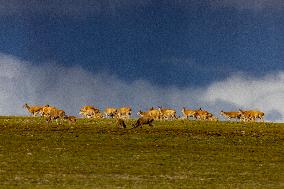
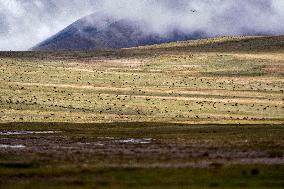
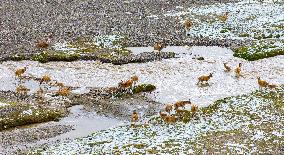
Tibetan antelopes prepare to cross the Senlong Zangbo River in Changtang National Nature Reserve in southwest China's Xizang Autonomous Region, July 14, 2025. The Senlong Zangbo River, located in Changtang National Nature Reserve in Nagqu, is a vital migration route for Tibetan antelopes. Each July, Tibetan antelope calves and their mothers cross the river and migrate to their habitats. Over the past three years, the number of Tibetan antelope migrating across this river has exceeded 150,000 each year. Thanks to effective conservation measures, the number of Tibetan antelopes in Xizang has increased to more than 300,000, according to data from the region's ecology and environment department. Photo by Jiang Fan /Xinhua/ABACAPRESS.COM

  •  
Tibetan Antelopes Migration - China

Tibetan Antelopes Migration - China

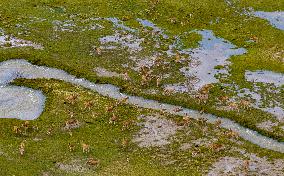
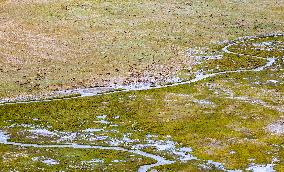
This aerial drone photo shows Tibetan antelopes crossing the Senlong Zangbo River in Changtang National Nature Reserve in southwest China's Xizang Autonomous Region, July 14, 2025. The Senlong Zangbo River, located in Changtang National Nature Reserve in Nagqu, is a vital migration route for Tibetan antelopes. Each July, Tibetan antelope calves and their mothers cross the river and migrate to their habitats. Over the past three years, the number of Tibetan antelope migrating across this river has exceeded 150,000 each year. Thanks to effective conservation measures, the number of Tibetan antelopes in Xizang has increased to more than 300,000, according to data from the region's ecology and environment department. Photo by Jiang Fan /Xinhua/ABACAPRESS.COM

  •  
Tibetan Antelopes Migration - China

Tibetan Antelopes Migration - China

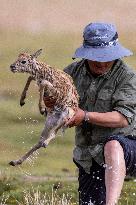
A ranger rescues a stranded Tibetan antelope calf in Changtang National Nature Reserve in southwest China's Xizang Autonomous Region, July 14, 2025. The Senlong Zangbo River, located in Changtang National Nature Reserve in Nagqu, is a vital migration route for Tibetan antelopes. Each July, Tibetan antelope calves and their mothers cross the river and migrate to their habitats. Over the past three years, the number of Tibetan antelope migrating across this river has exceeded 150,000 each year. Thanks to effective conservation measures, the number of Tibetan antelopes in Xizang has increased to more than 300,000, according to data from the region's ecology and environment department. Photo by Jiang Fan /Xinhua/ABACAPRESS.COM

  •  
Tibetan Antelopes Migration - China

Tibetan Antelopes Migration - China

Tibetan antelopes prepare to cross the Senlong Zangbo River in Changtang National Nature Reserve in southwest China's Xizang Autonomous Region, July 15, 2025. The Senlong Zangbo River, located in Changtang National Nature Reserve in Nagqu, is a vital migration route for Tibetan antelopes. Each July, Tibetan antelope calves and their mothers cross the river and migrate to their habitats. Over the past three years, the number of Tibetan antelope migrating across this river has exceeded 150,000 each year. Thanks to effective conservation measures, the number of Tibetan antelopes in Xizang has increased to more than 300,000, according to data from the region's ecology and environment department. Photo by Jiang Fan /Xinhua/ABACAPRESS.COM

  •  
Tibetan Antelopes Migration - China

Tibetan Antelopes Migration - China

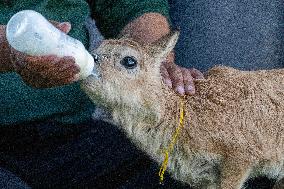
Ngawang Lodro, a staff member at a management station, feeds a Tibetan antelope calf in Changtang National Nature Reserve in southwest China's Xizang Autonomous Region, July 16, 2025. The Senlong Zangbo River, located in Changtang National Nature Reserve in Nagqu, is a vital migration route for Tibetan antelopes. Each July, Tibetan antelope calves and their mothers cross the river and migrate to their habitats. Over the past three years, the number of Tibetan antelope migrating across this river has exceeded 150,000 each year. Thanks to effective conservation measures, the number of Tibetan antelopes in Xizang has increased to more than 300,000, according to data from the region's ecology and environment department. Photo by Jiang Fan /Xinhua/ABACAPRESS.COM

  •  
Tibetan Antelopes Migration - China

Tibetan Antelopes Migration - China

This aerial drone photo taken on July 14, 2025 shows Tibetan antelopes crossing the Senlong Zangbo River in Changtang National Nature Reserve in southwest China's Xizang Autonomous Region. The Senlong Zangbo River, located in Changtang National Nature Reserve in Nagqu, is a vital migration route for Tibetan antelopes. Each July, Tibetan antelope calves and their mothers cross the river and migrate to their habitats. Over the past three years, the number of Tibetan antelope migrating across this river has exceeded 150,000 each year. Thanks to effective conservation measures, the number of Tibetan antelopes in Xizang has increased to more than 300,000, according to data from the region's ecology and environment department. Photo by Jiang Fan /Xinhua/ABACAPRESS.COM

  •  
Tibetan Antelopes Migration - China

Tibetan Antelopes Migration - China

This aerial drone photo shows Tibetan antelopes crossing the Senlong Zangbo River in Changtang National Nature Reserve in southwest China's Xizang Autonomous Region, July 14, 2025. The Senlong Zangbo River, located in Changtang National Nature Reserve in Nagqu, is a vital migration route for Tibetan antelopes. Each July, Tibetan antelope calves and their mothers cross the river and migrate to their habitats. Over the past three years, the number of Tibetan antelope migrating across this river has exceeded 150,000 each year. Thanks to effective conservation measures, the number of Tibetan antelopes in Xizang has increased to more than 300,000, according to data from the region's ecology and environment department. Photo by Jiang Fan /Xinhua/ABACAPRESS.COM

  •  
Iranian Nomads - Saqqez

Iranian Nomads - Saqqez

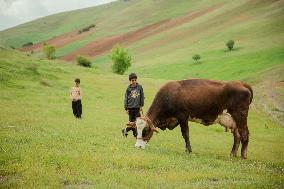
Two children stand near a grazing cow on a grassy field near Saqqez, Iran, on May 9, 2025. Saqqez is located in Iran's Kurdistan Province, where nomadic communities continue to practice seasonal migration and traditional livestock herding. Photo by Barbod Khorshidi/Middle East Images/ABACAPRESS.COM

  •  
Iranian Nomads - Saqqez

Iranian Nomads - Saqqez

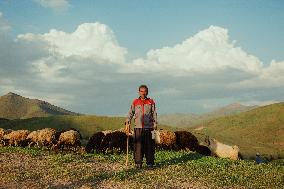
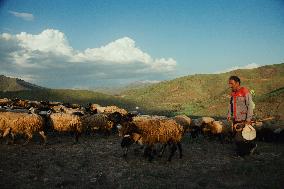
A man stands beside a flock of sheep in Saqqez, Iran, on May 9, 2025. Saqqez is located in Iran's Kurdistan Province, where nomadic communities continue to practice seasonal migration and traditional livestock herding. Photo by Barbod Khorshidi/Middle East Images/ABACAPRESS.COM

  •  
Iranian Nomads - Saqqez

Iranian Nomads - Saqqez

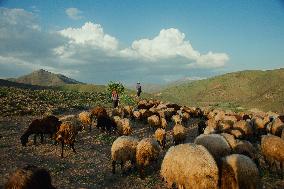
A flock of sheep grazes in a mountainous area near Saqqez, Iran, on May 9, 2025. Saqqez is located in Iran's Kurdistan Province, where nomadic communities continue to practice seasonal migration and traditional livestock herding. Photo by Barbod Khorshidi/Middle East Images/ABACAPRESS.COM

  •  
Iranian Nomads - Saqqez

Iranian Nomads - Saqqez

A man walks beside a flock of sheep in Saqqez, Iran, on May 9, 2025. Saqqez is located in Iran's Kurdistan Province, where nomadic communities continue to practice seasonal migration and traditional livestock herding. Photo by Barbod Khorshidi/Middle East Images/ABACAPRESS.COM

  •  
Iranian Nomads - Saqqez

Iranian Nomads - Saqqez

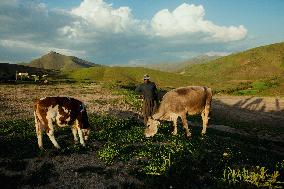
Two cows graze while a man walks nearby on farmland in Saqqez, Iran, on May 9, 2025. Saqqez is located in Iran's Kurdistan Province, where nomadic communities continue to practice seasonal migration and traditional livestock herding. Photo by Barbod Khorshidi/Middle East Images/ABACAPRESS.COM

  •  
Iranian Nomads - Saqqez

Iranian Nomads - Saqqez

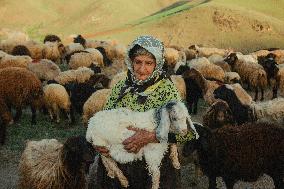
A woman holds a lamb while surrounded by sheep near Saqqez, Iran, on May 9, 2025. Saqqez is located in Iran's Kurdistan Province, where nomadic communities continue to practice seasonal migration and traditional livestock herding. Photo by Barbod Khorshidi/Middle East Images/ABACAPRESS.COM

  •  
Bird Migration - China

Bird Migration - China

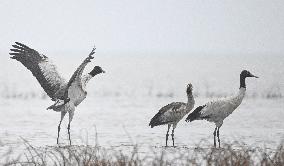
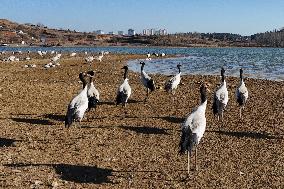
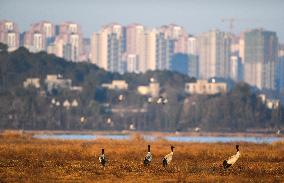
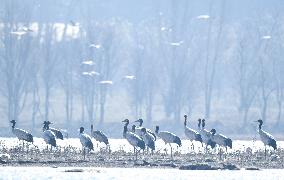
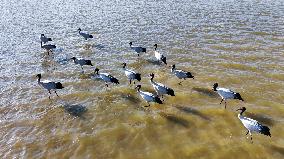
This photo taken on December 16, 2024 shows black-necked cranes at Caohai National Nature Reserve in the Yi-Hui-Miao Autonomous County of Weining, southwest China's Guizhou Province. Caohai National Nature Reserve is an important wintering ground for black-necked cranes. In recent years, the population of wintering black-necked cranes has increased, thanks to the local authorities' efforts in ecosystem restoration and patrolling. Currently, the reserve is home to nearly 100,000 wintering migratory birds, including 2,500-plus black-necked cranes as well as other species such as grey cranes and bar-headed geese. Photo by Yang Wenbin/Xinhua/ABACAPRESS.COM

  •  
Bird Migration - China

Bird Migration - China

This photo taken on December 16, 2024 shows wintering migratory birds at Caohai National Nature Reserve in the Yi-Hui-Miao Autonomous County of Weining, southwest China's Guizhou Province. Caohai National Nature Reserve is an important wintering ground for black-necked cranes. In recent years, the population of wintering black-necked cranes has increased, thanks to the local authorities' efforts in ecosystem restoration and patrolling. Currently, the reserve is home to nearly 100,000 wintering migratory birds, including 2,500-plus black-necked cranes as well as other species such as grey cranes and bar-headed geese. Photo by Yang Wenbin/Xinhua/ABACAPRESS.COM

  •  
Bird Migration - China

Bird Migration - China

This photo taken on December 16, 2024 shows wintering migratory birds at Caohai National Nature Reserve in the Yi-Hui-Miao Autonomous County of Weining, southwest China's Guizhou Province. Caohai National Nature Reserve is an important wintering ground for black-necked cranes. In recent years, the population of wintering black-necked cranes has increased, thanks to the local authorities' efforts in ecosystem restoration and patrolling. Currently, the reserve is home to nearly 100,000 wintering migratory birds, including 2,500-plus black-necked cranes as well as other species such as grey cranes and bar-headed geese. Photo by Yang Wenbin/Xinhua/ABACAPRESS.COM

  •  
Bird Migration - China

Bird Migration - China

This photo taken on December 16, 2024 shows black-necked cranes at Caohai National Nature Reserve in the Yi-Hui-Miao Autonomous County of Weining, southwest China's Guizhou Province. Caohai National Nature Reserve is an important wintering ground for black-necked cranes. In recent years, the population of wintering black-necked cranes has increased, thanks to the local authorities' efforts in ecosystem restoration and patrolling. Currently, the reserve is home to nearly 100,000 wintering migratory birds, including 2,500-plus black-necked cranes as well as other species such as grey cranes and bar-headed geese. Photo by Shen Guangyong/Xinhua/ABACAPRESS.COM

  •  
Bird Migration - China

Bird Migration - China

This photo taken on December 16, 2024 shows black-necked cranes at Caohai National Nature Reserve in the Yi-Hui-Miao Autonomous County of Weining, southwest China's Guizhou Province. Caohai National Nature Reserve is an important wintering ground for black-necked cranes. In recent years, the population of wintering black-necked cranes has increased, thanks to the local authorities' efforts in ecosystem restoration and patrolling. Currently, the reserve is home to nearly 100,000 wintering migratory birds, including 2,500-plus black-necked cranes as well as other species such as grey cranes and bar-headed geese. Photo by Yang Wenbin/Xinhua/ABACAPRESS.COM

  •  
Bird Migration - China

Bird Migration - China

This photo taken on December 16, 2024 shows black-necked cranes and bar-headed geese at Caohai National Nature Reserve in the Yi-Hui-Miao Autonomous County of Weining, southwest China's Guizhou Province. Caohai National Nature Reserve is an important wintering ground for black-necked cranes. In recent years, the population of wintering black-necked cranes has increased, thanks to the local authorities' efforts in ecosystem restoration and patrolling. Currently, the reserve is home to nearly 100,000 wintering migratory birds, including 2,500-plus black-necked cranes as well as other species such as grey cranes and bar-headed geese. Photo by Yang Wenbin/Xinhua/ABACAPRESS.COM

  •  
Bird Migration - China

Bird Migration - China

An aerial drone photo shows black-necked cranes at Caohai National Nature Reserve in the Yi-Hui-Miao Autonomous County of Weining, southwest China's Guizhou Province, December 16, 2024. Caohai National Nature Reserve is an important wintering ground for black-necked cranes. In recent years, the population of wintering black-necked cranes has increased, thanks to the local authorities' efforts in ecosystem restoration and patrolling. Currently, the reserve is home to nearly 100,000 wintering migratory birds, including 2,500-plus black-necked cranes as well as other species such as grey cranes and bar-headed geese. Photo by Wang Chunliang/Xinhua/ABACAPRESS.COM

  •  
Bird Migration - China

Bird Migration - China

This photo taken on December 16, 2024 shows black-necked cranes at Caohai National Nature Reserve in the Yi-Hui-Miao Autonomous County of Weining, southwest China's Guizhou Province. Caohai National Nature Reserve is an important wintering ground for black-necked cranes. In recent years, the population of wintering black-necked cranes has increased, thanks to the local authorities' efforts in ecosystem restoration and patrolling. Currently, the reserve is home to nearly 100,000 wintering migratory birds, including 2,500-plus black-necked cranes as well as other species such as grey cranes and bar-headed geese. Photo by Yang Wenbin/Xinhua/ABACAPRESS.COM

  •  
Bird Migration - China

Bird Migration - China

This photo taken on December 16, 2024 shows black-necked cranes at Caohai National Nature Reserve in the Yi-Hui-Miao Autonomous County of Weining, southwest China's Guizhou Province. Caohai National Nature Reserve is an important wintering ground for black-necked cranes. In recent years, the population of wintering black-necked cranes has increased, thanks to the local authorities' efforts in ecosystem restoration and patrolling. Currently, the reserve is home to nearly 100,000 wintering migratory birds, including 2,500-plus black-necked cranes as well as other species such as grey cranes and bar-headed geese. Photo by Yang Wenbin/Xinhua/ABACAPRESS.COM

  •  
Bird Migration - China

Bird Migration - China

This photo taken on December 16, 2024 shows black-necked cranes at Caohai National Nature Reserve in the Yi-Hui-Miao Autonomous County of Weining, southwest China's Guizhou Province. Caohai National Nature Reserve is an important wintering ground for black-necked cranes. In recent years, the population of wintering black-necked cranes has increased, thanks to the local authorities' efforts in ecosystem restoration and patrolling. Currently, the reserve is home to nearly 100,000 wintering migratory birds, including 2,500-plus black-necked cranes as well as other species such as grey cranes and bar-headed geese. Photo by Yang Wenbin/Xinhua/ABACAPRESS.COM

  •  
Bird Migration - China

Bird Migration - China

An aerial drone photo shows black-necked cranes at Caohai National Nature Reserve in the Yi-Hui-Miao Autonomous County of Weining, southwest China's Guizhou Province, December 16, 2024. Caohai National Nature Reserve is an important wintering ground for black-necked cranes. In recent years, the population of wintering black-necked cranes has increased, thanks to the local authorities' efforts in ecosystem restoration and patrolling. Currently, the reserve is home to nearly 100,000 wintering migratory birds, including 2,500-plus black-necked cranes as well as other species such as grey cranes and bar-headed geese. Photo by Wang Chunliang/Xinhua/ABACAPRESS.COM

  •  
Bird Migration - China

Bird Migration - China

This photo taken on December 16, 2024 shows bar-headed geese at Caohai National Nature Reserve in the Yi-Hui-Miao Autonomous County of Weining, southwest China's Guizhou Province. Caohai National Nature Reserve is an important wintering ground for black-necked cranes. In recent years, the population of wintering black-necked cranes has increased, thanks to the local authorities' efforts in ecosystem restoration and patrolling. Currently, the reserve is home to nearly 100,000 wintering migratory birds, including 2,500-plus black-necked cranes as well as other species such as grey cranes and bar-headed geese. Photo by Yang Wenbin/Xinhua/ABACAPRESS.COM

  • Main
  • Top
  • Editorial
  • Creative
  • About Us
  • About ILG
  • Terms of use
  • Company
  • BEHIND
  • Price List
  • Single Plan
  • Monthly Plan
  • Services
  • Shooting
  • Rights Clearance
  • Support
  • FAQ
  • How To Buy
  • Contact Us
  • Become a Partner

© KYODO NEWS IMAGES INC

All Rights Reserved.

  • Editorial
  • Olympics
  • News
  • Sports
  • Japan
  • Tech
  • Royal
  • Disaster
  • NorthKorea
  • Old Japan
  • SNS
  • Creative
  • Food
  • Japan
  • Landscape
  • Animal
  • Popular
  • #Ukraine
  • #Russia
  • #coronavirus
  • #N. Korea
  • #Thailand
  • #China
  • #Ukraine
  • #Russia
  • #coronavirus
  • #N. Korea
  • #Thailand
  • #China
  • Food
  • Japan
  • Landscape
  • Animal
  • Olympics
  • News
  • Sports
  • Japan
  • Tech
  • Royal
  • Disaster
  • NorthKorea
  • Old Japan
  • SNS